
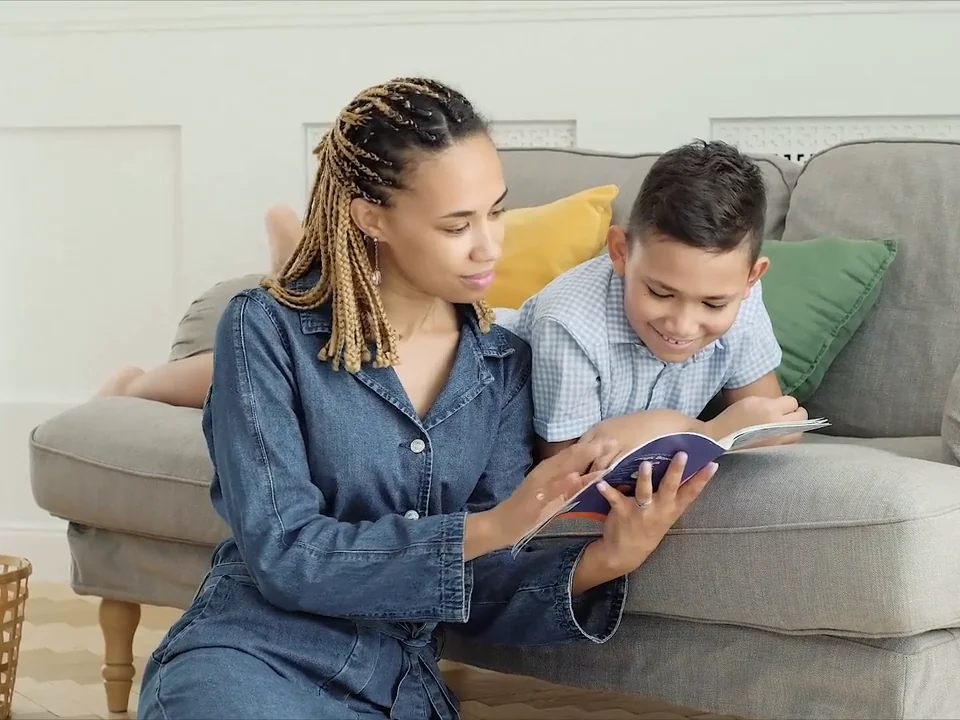
A shared reading moment does not need an elaborate plan. It might begin with a favourite page, an interesting picture or a question about a word you have both noticed. For a parent or carer, the invitation can be as simple as, “Shall we look at this together?”
The ideas below are gentle starting points for a conversation at home. They are not a programme or a set of targets. Choose what suits the child and the moment, and feel free to leave the rest for another day.
Let interest open the door
Ask what they would like to explore. It could be a story they already know, a page about an animal or the instructions for something you want to make together. You do not have to introduce new material every time. A familiar passage can still offer something to notice or talk about.
If choosing feels like another task, offer two possibilities and let the child decide. You could also choose together. The point is to create an opening for shared attention, rather than to find the perfect book before you begin.
Make room for different roles
You might read a sentence aloud while the child follows the page. They might take a turn, point to a detail in a picture or tell you which part they want to revisit. Shared reading can include listening, looking and talking as well as reading words aloud.
Check what feels comfortable instead of assuming that taking turns is always welcome. “Would you like me to read this part?” leaves space for a choice. So does accepting a pause without turning it into a problem that needs to be solved immediately.
Follow a little curiosity
A conversation does not need to cover every detail on the page. Pick up on something the child has noticed, or share something you are wondering about. Keep the invitation open enough for an unexpected answer, including an answer expressed through a gesture or a picture.
- Which part caught your attention?
- What do you notice in this picture?
- Is there a word you would like to explore together?
- Does this remind you of anything?
You can share your own thoughts too. “I wondered what that word meant” makes room for curiosity without asking the child to perform. If a question interrupts their enjoyment, it is fine to return to the story.
Finish with room to return
There is no need to finish the whole book for a shared moment to count. You might mark a page to return to, remember a favourite detail or simply close the book together. Let the ending feel like part of the experience rather than a judgement about how much was completed.
ClarifyRead’s wider aim is to support different ways of engaging with written information and the people around each learner. You can explore that approach on the Product page. If you are a parent or carer with questions about access or suitability for your situation, the contact page explains how to start that conversation.